
Flagpole Installation and Repair Services in Little Elm, TX
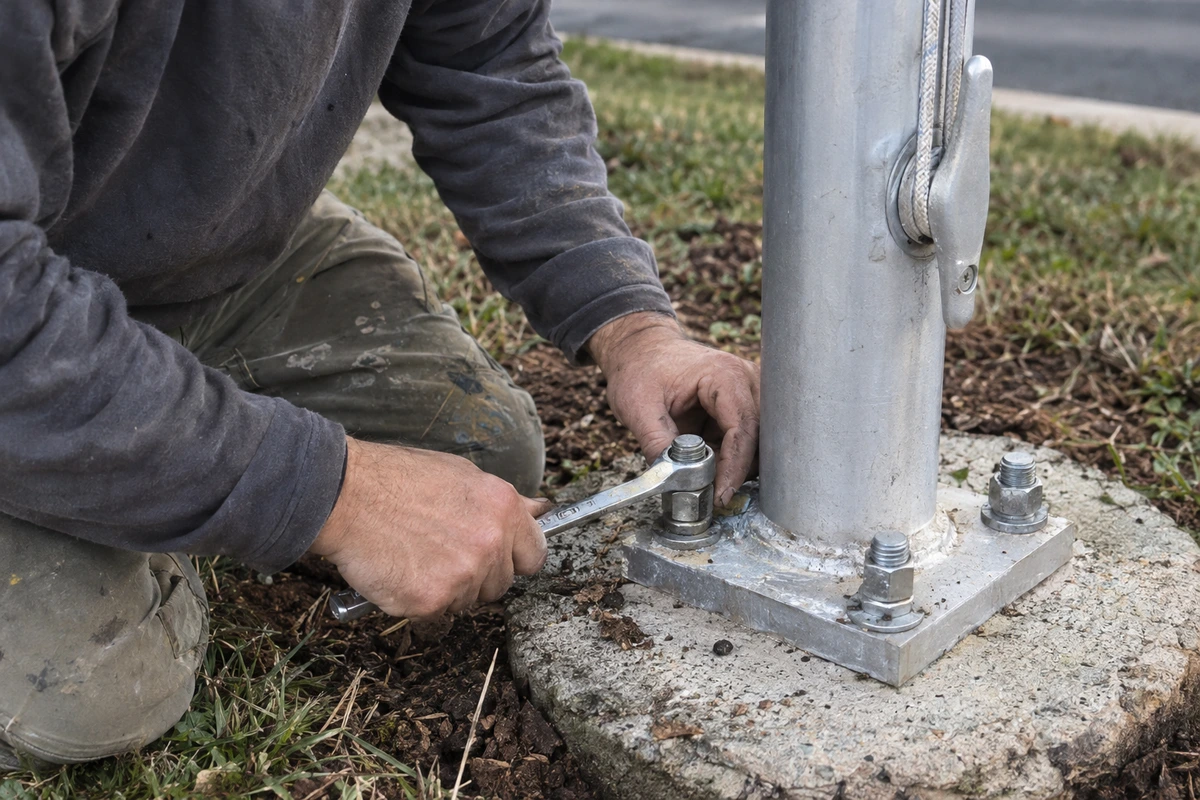
DFW Flagpole Guys provides flagpole installation and repair throughout Dallas-Fort Worth for homeowners, businesses and public buildings. We install steel and wall-mounted flagpoles as well as commercial poles with internal halyards. Our crew also fixes loose ground sleeves, broken snap hooks, leaning poles and missing finials, takes care of routine upkeep, and removes or relocates old flagpoles you no longer need. Contact us for a free quote today.
What Flagpole Installation and Repair Actually Covers
Flagpole installation and repair is the setting, plumbing and servicing of a ground-mounted pole, from the buried foundation sleeve up to the truck at the top. A residential pole is usually a tapered aluminum shaft standing in a steel or PVC ground sleeve set in concrete, with a halyard rope running over a pulley in the truck and tied off at a cleat. Poles fail at the base more often than the top: water collects in the sleeve, sand wedges shift, and the shaft starts to lean or rock in wind. Up high, halyards fray from UV and pulleys seize, leaving a flag stuck halfway. Swapping a rope from the ground fixes only the visible symptom, while a proper service checks the footing, the plumb of the shaft, the collar and the truck together.
When Flagpole Installation and Repair Makes Sense
A faint clanging at night is the warning most owners brush off as normal halyard slap, yet it often means a loose snap hook or a worn pulley. A lean deserves the fastest attention, since wind keeps working a loose base until the footing cracks.
- Pole visibly out of plumb when sighted from two sides
- Flag stuck partway and refusing to come down
- Halyard rope faded, stiff or fraying at the cleat
- Shaft rocking or squeaking inside the ground sleeve
- New home, business or memorial wanting a permanent pole
- Old wooden or steel pole showing rot or rust at grade
Our Flagpole Installation and Repair Process
The ground sleeve and the soil around it get checked first for heaving, standing water and any crack in the concrete collar. Utility locate marks are confirmed before any digging, then a post-hole auger or clamshell digger opens the hole to the depth the pole height calls for, usually about a tenth of the exposed height. The sleeve is set on a gravel bed for drainage, held plumb with braces, and concrete is poured around it and left to cure. On a repair, the pole is lowered with a crew holding the shaft so the truck never hits the ground, then the old halyard, snap hooks and cleat come off. The truck pulley is cleaned or replaced, a new halyard is run, and the shaft goes back into the sleeve. Dry sand gets tamped around the butt, steel wedges set it plumb, and we check vertical with a 4-foot level on two faces. A rubber flash collar seals the top of the sleeve, and we run the flag to the top and back to confirm smooth travel.
Equipment and Materials Used in Flagpole Installation and Repair
Commercial-grade aluminum in a heavy wall thickness is the usual choice for poles, because it won't rust and flexes in gusts without taking a permanent bend. Braided polyester halyard is used over cotton or nylon rope since it resists UV and doesn't stretch slack in wet weather. A galvanized steel ground sleeve lets the pole be pulled later for service, which a pole cast directly in concrete never allows. Dry masonry sand fills the sleeve gap instead of grout so water drains and the shaft can be removed. Stainless snap hooks with rubber covers quiet the halyard against the shaft. Concrete mixed from bagged high-strength mix holds the sleeve firmly against wind load.
Can You Do Flagpole Installation and Repair Yourself?
The halyard and hardware side of the job is homeowner work on a short pole; the foundation and raising side is not. A telescoping pole of about 20 feet or less, or a sectional pole on a short sleeve, can be set and restrung by a careful owner with a helper. Once a one-piece pole passes roughly 20 to 25 feet, its weight and leverage during raising can easily drop it onto a roof or person. Digging a deep footing without a utility locate risks hitting gas or electric lines, and any pole near overhead wires belongs to a pro. Some towns also set height limits or require a permit.
What Makes a Flagpole Installation and Repair Job Bigger
Exposed pole height counts most, because footing depth, shaft wall thickness and the crew needed to raise it all climb with every foot. A pole set straight in concrete with no sleeve often goes unnoticed until removal means breaking out the whole foundation.
- Pole height and whether it is one piece or sectional
- Rocky soil, roots or buried utilities in the dig area
- Cracked footing that must be broken out and repoured
- Internal halyard poles with a locked access door and winch
- Overhead wires, trees or tight yard access near the pole
- Several poles set in a row for a business entrance
How Long Does Flagpole Installation and Repair Take and Last?
A typical flagpole installation and repair job runs one to two hours, usually for a restring and pulley swap on an existing residential pole. A new install with a fresh foundation usually takes most of a day, then a return visit after the concrete cures for several days before the pole goes in. Rocky ground, tall poles and repoured footings stretch it further. A well-set aluminum pole commonly stands 20 to 30 years or more, while halyards typically need replacing every two to five years and truck pulleys somewhat longer.
What Comes After Flagpole Installation and Repair
Lighting work most often follows, because flag etiquette calls for illumination when a flag flies overnight. An in-ground spotlight aimed up the shaft usually means a buried low-voltage or line-voltage circuit run to the base.
- Have a licensed electrician run power for a flagpole spotlight
- Inspect the halyard and snap hooks every spring for fraying
- Replace the flag once edges start to tatter and unravel
- Check the pole for plumb after heavy storms or soil heaving
- Reseal or replace the flash collar when it cracks
How Much Does Flagpole Installation and Repair Cost in Little Elm, TX?
Flagpole installation and repair in Little Elm, TX generally costs anywhere from $259 for servicing the halyard and pulley on an existing pole to $3,410 for a new one-piece aluminum pole set in a fresh concrete footing. Height above ground is the biggest factor in price, because a taller shaft calls for a heavier wall, a deeper hole and more hands to stand it up. Rocky soil, a cracked footing that has to be broken out and repoured, overhead wires or tight access around the base will all push a job toward the top of the range.